Pennsylvania shoppers buy quality goods. The median household income of $76,081 shows steady buying power for nicer packaging. Local stores and online sellers both need Pennsylvania Custom Rigid Boxes that look good and protect items. Small brands and big stores can use our Pennsylvania Custom Rigid Boxes Purchasing Guide to get packaging that can sell more.
Pennsylvania has 13,078,751 people and grew +0.6% since 2020. Also, 20.4% of residents are 65 or older. Older buyers often prefer neat, sturdy Custom Rigid Gift Boxes for gifts and keepsakes. Therefore, design and feel matter as much as price.
Pennsylvania Custom Rigid Boxes Purchasing Guide

In this Guide, you will get to know 10 tips to buy Custom Rigid Boxes in Pennsylvania.
1. Source local vs national suppliers
Local suppliers help cut time and cost. National or overseas suppliers can lower unit price for big runs. Choose based on speed, budget, and control.
- Visit local converters to check samples quickly.
- Ask for on-site QA visits or video checks.
- Compare freight and lead time costs.
- Negotiate trial runs before large orders.
- Balance speed and price: local for fast needs; national for big savings.
Practical steps: call three local shops; request samples; compare quotes; check lead time; pick one for a pilot run.
2. Set realistic minimum order quantities (MOQ)
MOQ affects price and risk. Small brands should start small. Larger brands can use higher MOQs to cut costs.
- Request MOQ tiers and price breaks.
- Start with a pilot run of 100–500 units.
- Ask for rolling MOQs for repeat orders.
- Track unit cost at each tier to find the sweet spot.
- Use sample runs to test demand before big orders.
Practical steps: get three tiered quotes; calculate unit cost at each tier; choose the tier that fits cash flow and demand.
3. Choose materials and sustainability
According to the Pennsylvania Custom Rigid Boxes Purchasing Guide, Material choice affects look, strength, and cost. Recycled content and certifications help brand trust.
- Ask for paperboard grade and recycled content.
- Request FSC or recycled certificates from suppliers.
- Test compostable inserts for fragile items.
- Balance cost with brand claims and customer expectations.
- Consider post-consumer recycled (PCR) options for green branding.
Practical steps: request material swatches; check certificates; run a short test for durability and feel.
4. Approve dielines and structure
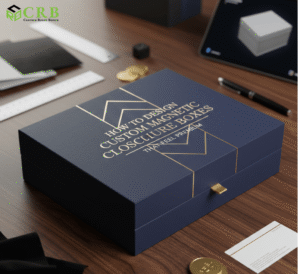
A correct dieline for the Custom Magnetic Closure Boxes prevents mistakes. A mockup shows fit and finish. Sign off in writing to avoid extra cost.
- Get dieline PDFs and a physical mockup.
- Test-fit products and add ribs for heavy items.
- Sign off on dielines in writing to avoid rework.
- Run a small drop test before full runs.
- Check glue lines and fold points on the mockup.
Practical steps: review dieline with the pack team; test with the actual product; approve only after a physical mockup passes tests.
5. Pick printing and finishes
Print choices for your Custom Luxury Boxes shape brand feel. Use special finishes on key SKUs to keep costs down.
- Choose CMYK or spot colors; request Pantone matches.
- Use foil or soft-touch on hero SKUs only.
- Ask for color proofs and press checks.
- Limit special finishes to control cost.
- Consider matte or gloss based on product style.
Practical steps: order a color proof; compare with brand guide; approve only after color match and finish test.
6. Design inserts and protection
Good Custom Packaging Inserts cut damage and returns. Inserts also make unboxing feel special.
- Try molded pulp for eco options or foam for fragile goods.
- Prototype inserts and test shipping performance.
- Reduce void space to cut shipping costs.
- Use simple assembly designs to speed packing.
- Choose inserts that match brand values and budget.
Practical steps: make one prototype insert; run a 3-drop test; measure fit and ease of packing.
7. Plan lead times and seasons
Rigid boxes need time to make. Plan early for holidays and big launches.
- Expect 5–8 weeks for rigid box production; plan earlier for holidays.
- Reserve production slots 8–12 weeks before peak season.
- Keep a safety stock of 20–30% for holiday spikes.
- Reorder when inventory hits 30% of forecast.
- Communicate dates clearly with the supplier.
Practical steps: set a calendar with reorder points; book production slots early; track inventory weekly.
8. Cut costs without losing quality
Our Pennsylvania Custom Rigid Boxes Purchasing Guide explains that the smart design choices lower cost. Small changes can save a lot over time.
- Use fewer colors and hybrid finishes.
- Consolidate SKUs into larger runs.
- Compare local vs overseas quotes including freight and duties.
- Ask suppliers for cost-saving dieline tweaks.
- Use standard sizes where possible to save tooling fees.
Practical steps: run a cost model for each SKU; test hybrid finishes; choose the best mix of cost and look.
9. Shipping, labeling, and compliance
Boxes must ship well and meet rules. Good labeling speeds fulfillment and reduces errors.
- Design for pallet stacking and automated fulfillment.
- Add barcode zones and clear label panels.
- Confirm shipping dimensions to avoid freight surprises.
- Test a packed pallet for stability.
- Check local and carrier rules for hazardous or regulated items.
Practical steps: pack a pallet and test for stability; confirm barcode placement with the fulfillment center; update dieline if needed.
10. Vendor evaluation checklist
A clear scorecard helps pick the right partner. Track quality, time, and cost.
- Score sample quality, QA steps, lead time, and sustainability claims.
- Ask for references and a written defect warranty.
- Keep a preferred-vendor list and audit annually.
- Track on-time delivery rate and defect rate.
- Check for clear communication and easy problem solving.
Practical steps: create a 10-point scorecard; rate each vendor; pick the top two for trials.
Tips to Buy Custom Rigid Boxes in Pennsylvania
| Tips | Key actions | Practical steps | Notes |
|---|---|---|---|
| Source local vs national suppliers | Visit converters; compare freight, lead time; negotiate trials | Call 3 local shops; request samples; run a pilot | Local = faster; national = cheaper at scale |
| Set realistic MOQs | Request tiered MOQs and price breaks; pilot small runs | Get 3 tiered quotes; calculate unit cost per tier | Start 100–500 units to test demand |
| Choose materials & sustainability | Ask for grades, PCR, FSC; get swatches and certificates | Request swatches; verify certificates; run feel tests | PCR boosts green claims; may cost more |
| Approve dielines & structure | Get dieline PDFs and physical mockup; test-fit product | Test with actual product; sign off in writing | Correct dieline avoids rework |
| Pick printing & finishes | Choose CMYK/spot; limit special finishes to hero SKUs | Order color proof; do press/color checks | Fewer finishes cut cost |
| Design inserts & protection | Prototype inserts; reduce voids; simplify assembly | Make one prototype; run 3-drop test; measure fit | Right insert lowers damage and returns |
| Plan lead times & seasons | Book production early; set reorder points; keep safety stock | Reserve slots 8–12 weeks before peak; track weekly | Rigid boxes 5–8 week lead time |
| Cut costs without losing quality | Use fewer colors; consolidate SKUs; standard sizes | Run cost model per SKU; test hybrid finishes | Standard sizes save tooling fees |
| Shipping, labeling & compliance | Design for pallets and automation; add barcode zones | Pack a pallet; test stability; confirm label placement | Accurate dims avoid freight surprises |
| Vendor evaluation checklist | Score quality, QA, lead time, sustainability; get warranty | Create 10-point scorecard; trial top two vendors | Track on-time and defect rates annually |
Custom Rigid Boxes Purchasing Guide | Useful Tools
A few simple templates help run the buying process. Use them to save time and avoid mistakes.
- Sample request template: list size, material, print, finish, and quantity.
- Dieline approval form: include sign-off, date, and change log.
- Vendor scorecard: list quality, lead time, cost, and sustainability.
- Packing test checklist: include drop tests, compression tests, and pallet tests.
Practical steps: copy each template into a shared folder; use them for every supplier interaction.
Common mistakes and how to avoid them
Many buyers repeat the same errors. A short list helps avoid them.
- Rushing dieline approval leads to rework.
- Skipping physical mockups causes fit issues.
- Ignoring freight adds hidden costs.
- Using too many special finishes raises prices.
- Not testing inserts causes returns.
Practical steps: add a final review step; require a mockup before full runs; include freight in the budget.
Local tips for Pennsylvania buyers
Local knowledge saves time and money. Use nearby resources to move faster.
- Visit regional trade shows to meet converters.
- Use local freight carriers for short runs.
- Ask for pickup to cut delivery time.
- Tap local design schools for low-cost mockups.
- Check state manufacturing networks for vetted suppliers.
Practical steps: list three local events; plan visits; collect business cards and samples.
Never Forget Sustainability and brand value
The Pennsylvania Custom Rigid Boxes Purchasing Guide shows that the Green choices can boost sales. Customers notice recycled content and clear claims.
- Use recycled board and compostable inserts where possible.
- Request certificates to prove claims.
- Highlight green choices on the box and online.
- Balance green options with cost and durability.
- Track customer feedback on custom packaging in Pennsylvania.
Practical steps: test one green SKU; measure customer response; expand if feedback is positive.
Testing and quality checks
Testing saves money. A few simple tests catch most problems.
- Run a 3-drop test for fragile items.
- Do a compression test for stacked pallets.
- Check print color on a real sample.
- Inspect glue lines and corners for strength.
- Track defect rate after first shipments.
Practical steps: set pass/fail criteria; reject samples that fail; document issues and fixes.
Go for Vendor communication and contracts
Clear terms prevent disputes. Put key items in writing.
- Agree on lead time, MOQ, and price in the contract.
- Include a sample approval clause.
- Add a defect warranty and return terms.
- Set payment terms and penalties for late delivery.
- Keep a change log for any design edits.
Practical steps: use a simple contract template; have legal review for large orders; keep records of all changes.
Custom Rigid Boxes Purchasing Guide – Final checklist
A short checklist avoids last-minute problems.
- Confirm dieline and mockup approval.
- Verify material certificates and color proofs.
- Check lead time and production slot.
- Confirm freight terms and pallet specs.
- Approve final invoice and payment schedule.
Practical steps: run the checklist with the team; sign off before production starts.
Order Custom Rigid Boxes Wholesale to Grow Your Brand!
Ready to get better boxes? Use our Pennsylvania Custom Rigid Boxes Purchasing Guide. Request samples from two local suppliers and one national supplier. Book a mockup test and run a small pilot of 100–500 units. Lock a production slot early for holiday runs and ask for a written QA plan. Start with a clear dieline and a simple contract to protect the brand and the budget. For the best results, contact customrigidboxes now.
FAQs
How to test a supplier?
- Order 3 sample units;
- Run a 3-drop test;
- Check color match with a Pantone proof;
- Verify material certificates and lead time.
How to cut print costs?
- Reduce spot colors to save 10–25% on print;
- Use hybrid finishes to lower per-unit cost;
- Consolidate SKUs to save 15–30% on runs.
What size info should be on a sample request?
Include length, width, height, product weight, material grade, print colors, finish type, and desired quantity. Add any insert needs and shipping method.